Recently in Premises Liability Category

December 23, 2009

Newburyport, Massachusetts Scaffolding Collapse Severely Injures Two Men

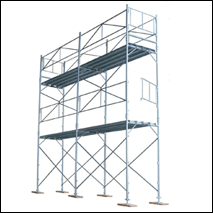
December 23, 2009 - Gerard Boucher, 48 from Newburyport, Massachusetts, and Geraldo Hernandez, 37 of Haverhill, were seriously injured when the scaffolding, which they were using to renovate a home in Newburyport, collapsed beneath them Tuesday afternoon. The two men were working at the home located at 25-27 Kent Street when the accident occurred.

scaffold.gifAccording to police, the men were hanging fascia board trim along the roof on the side of the house adjacent to the home at 29 Kent Street. It appears that a faulty bracing support caused the scaffolding to tumble. A third worker, who was installing ice shields on the roof at the time of the accident, heard the crash but did not see the men fall.

When rescue workers arrived on the scene, both victims were unconscious and Boucher had visible massive head trauma. The men were treated at the scene and then brought to Anna Jacques Hospital in Newburyport. Boucher was subsequently transferred by medical helicopter to Massachusetts General Hospital, where he is listed in critical condition. Hernandez was also airlifted to Beth Israel Hospital, where he is listed in good condition.

This accident remains under investigation by the Newburyport Police Department and the U.S. Occupational Safety and Health Administration.

Source: The Gloucester Times, The Gloucester Times

Continue reading "Newburyport, Massachusetts Scaffolding Collapse Severely Injures Two Men" »

Bookmark and Share
July 14, 2009

Massachusetts Appeals Court Allows Fire Inspector's Expert Testimony

Boston Massachusetts Personal Injury Attorney, Keith L. Miller, reviews a recent Appeals Court case involving an apartment fire:

The Massachusetts Appeals Court has recently reversed the trial court's decision to exclude a fire inspector's expert testimony in a case where a plumber may have negligently caused a fire in an apartment.

Cambridge Fire.JPGMichael Paulo, the plumber, used a machine called the IceBreaker 350 to thaw frozen pipes in a Somerville apartment owned by Irena Anderson, before a fire broke out. The pipe-thawing machine was used underneath the sink of the third floor apartment. Before he used the machine, Paulo removed the items that were under the sink, which included some household cleaners and rags.

 Paulo told Anderson that he had to run the machine for a longer period than usual because of the severe frozenness of the pipes. As Paulo was consulting with Anderson outside of the house, the second floor resident exited the building and alerted them that a fire had broken out on the third floor.

Paulo alleges that he cleared out the contents from under the sink, used the machine for about ten minutes until the ice started to melt, discontinued use of the machine, and then cleaned up and put the items back under the sink.

It appears that the pipes were still so hot that either their direct contact with the cleaning supplies or the heat generated by the pipes caused the fire. At least that is what Lieutenant Brian Higgins of the Cambridge Fire Department concluded in his official fire inspection report.

Continue reading "Massachusetts Appeals Court Allows Fire Inspector's Expert Testimony" »

Bookmark and Share
July 4, 2009

Natick, Massachusetts Elderly Woman Crashes into Liquor Store

July 4, 2009 - Jacqueline Sorensen, age 83, crashed her car through the storefront window of a Natick, Massachusetts liquor store yesterday. The Ford Mustang convertible hit the checkout counter and struck the cashier, apparently only causing the female worker only minor personal injuries. Natick police investigated the car accident, have charged Sornesen with Operating to Endanger and have suspended her operator's license, calling her an immediate threat.

According to Natick Police, the car crashed into Fannon's Liquor Store on North Main Street at about 10:40 a.m. The driver was taken to the hospital, suffering from chest pain. Apparently, she had no recollection of what had happened. Her car had a handicapped placard.

The cashier, Debra Blenkhorn, 51, has worked at the store for 13 years. She was also taken to the hospital with arm and neck pain. Apparently, she had been pinned between the counter and a shelf full of liquor bottles.

Is this spate of elderly accidents something new, or is there just heightened reporting lately as the result of the tragic death of 4 year old Diya Patel? Regardless, Massachusetts lawmakers now appear determined to pass legislation requiring additional testing of elderly persons for their driving capabilities, in an attempt to stem these unfortunate accidents.

Source: Boston.com 

__________________________________________________________________________

The above information is provided by Boston Accident and Personal Injury Lawyer, Keith L. Miller, a Boston, Massachusetts civil trial lawyer, specializing in the legal representation of individuals who believe that they have been injured as the result of the negligence of others and have been involved in all types of accidents causing personal injury. If you or a loved one has been injured in an accident where you believe someone else is at fault, contact Keith L. Miller to arrange a free consultation 24 hours a day, 7 days a week either by telephone at (617) 523-5803, or click here to send him an email. You will be contacted within 24 hours.

Bookmark and Share
June 11, 2009

Rhode Island Auto Accident Takes Two Teenage Lives

Marcello Ventrella, and Aram J. Pothier, respectively of Bellingham and Blackstone, Massachusetts, have died as the result of personal injuries suffered after a night of teenage drinking. They were passengers in a motor vehicle driven by Robert Baez, who was seriously injured, but survived the accident. The accident took place on I-295 in Smithfield, Rhode Island. Both of the deceased were riding in the backseat, were not wearing seatbelts and were pronounced dead at the scene.  The fourth passenger, Christopher J. Cuomo, escaped without serious injuries.  


The young men began their night in Massachusetts, but allegedly ventured to a Providence, Rhode Island bar, where it appears they were served alcohol.  Rhode Island State Police are still investigating the details of the accident and the events preceding the accident. However, it appears that all four of the young men had been drinking and were served in the bar, as yet unidentified.


The obvious question arises as to who is ultimately responsible for this tragic accident. Baez, the young driver, of course is the primary responsible party. However, the tougher question is whether others can and should be held responsible for the condition he was in at the time of the accident. Given that all four were underage, including Baez, if it is true that he was served at a public drinking establishment, the owners of that bar may bear some responsibility for the accident.

The law with respect to the responsibility and liability of public establishments, which are licensed to serve alcohol is well established in Massachusetts and Rhode Island,  "Dram shop liability" arises when bars and liquor stores negligently serve alcohol to underage or noticeably intoxicated individuals.  This requires proof that the bar knew or should have known that the customer who drove a vehicle was intoxicated. 

A traditional dram shop case involves an innocent injured third party such as the driver of another vehicle or somewhat walking down the street.  The fact that the claimant in this instance  were passengers in the vehicle, may have also been drinking themselves, and likely knew that Baez also had been drinking. Such facts may raise issues of comparative negligence, but does not bar recovery for the families of the deceased young men who died in this accident.

  Source: Bostonchannel.com
 ___________________________________________________________________

The above information is provided by Boston Accident and Personal Injury Lawyer, Keith L. Miller, a Boston, Massachusetts civil trial lawyer, specializing in the legal representation of individuals who believe that they have been injured as the result of the negligence of others and have been involved in all types of accidents causing personal injury. If you or a loved one has been injured in an accident where you believe someone else is at fault, contact Keith L. Miller to arrange a free consultation 24 hours a day, 7 days a week either by telephone at (617) 523-5803, or click here to send him an email. You will be contacted within 24 hours. 


Continue reading "Rhode Island Auto Accident Takes Two Teenage Lives" »

Bookmark and Share
April 21, 2009

Employee's Personal Injuries After Fall through Open Trap Door in Floral Shop does not Warrant Double Compensation, Says Appeals Court

Boston Personal Injury Lawyer, Keith L. Miller, analyzes a recent Appeals Court decision pertaining to double penalties under the Worken's Compensation Act.

The case involves a store employee who suffered serious personal injuries after falling through a trap door in the floor of a floral shop, the Massachusetts Appeals Court has reversed a decision by the Department of Industrial Accidents reviewing board that awarded an employee double compensation (under Mass. G.L. c. 152, § 28), finding that the employee's injury was due to the serious and wilful misconduct of the employer. The Appeals Court determined that the record did not support a finding that the employer's conduct rose to the level of a wanton and reckless disregard for safety.

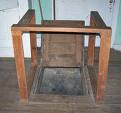
trap door.jpgThe employee was working at a floral shop on Valentines day in 1991 when she fell into a trap-door floor opening, which covered a set of stairs leading down to the cellar. She fell into the hole sustaining serious personal injuries. The floor door measured approximately eight feet by three feet, and qualified as a "floor opening", which made it subject to the state and federal regulations, and certain mandatory safeguards.

The employer was not aware of the regulations, and instead relied on its own warning system of orange safety cones and chains to warn and protect the employees. However, the system was only used sporadically, and was not in place on the day of the accident. There was also some evidence that there may have been insufficient floor space in the area of the trap door due to the placement of a table for completed work orders. There was also evidence that because it was Valentine's day, the work pace in the store was much heavier than normal.

Continue reading "Employee's Personal Injuries After Fall through Open Trap Door in Floral Shop does not Warrant Double Compensation, Says Appeals Court " »

Bookmark and Share
April 6, 2009

Personal Injuries Suffered by Contract Worker May be Recoverable from Manufacturing Company where he Worked

This is Part Two of a two part Blogpost where Boston Personal Injury Lawyer, Keith L. Miller, reviews and analyzes a recent First Circuit U.S. Court of Appeals ruling, in which an insurer sought a declaration that there was no coverage for an personal injuries as the result of an accident involving a contract worker who severed his arm in a wool picking machine. The worker had sued the Massachusetts recycling company where he had been working for a number of months. (Click here to view Part One)

PART TWO :  THE COURT ANALYZES DISTINCTION BETWEEN "LEASED WORKER" AND "TEMPORARY WORKER" IN POLICY TO DETERMINE COVERAGE

Having reviewed the underlying facts of the case, the Court went on to analyze the express language of the insurance policy, attempting to discern whether the lower court had correctly determined that the the worker's contract was indefinite and therefore not temporary, which was its basis for ruling that there was no coverage for the accident.

wool baling machine.jpgIn the policy a leased worker was defined as a person leased to you by a labor leasing firm under an agreement between you and the labor leasing firm, to perform duties related to the conduct of your business. A temporary worker was defined as a person who is furnished to you to substitute for a permanent "employee" on leave or to meet seasonal or short-term workload conditions.

The question then for the Court of Appeals was whether Torres was a "leased worker," and thus excluded from coverage; or a "temporary worker," thus obligating Scottsdale to provide a defense and coverage in Torres's lawsuit. The district court had determined that Torres was not a temporary worker on the basis that the term "short term" worker, though not defined in the policy, suggested a brief and relatively finite period of time.

Based on deposition testimony of CTC's president that Torres was to stay at CTC "for as long as he was needed", and a Venturi manager's testimony that Torres was assigned to CTC "indefinitely," the lower court determined  that "indefinite" and "short-term" were mutually exclusive, that Torres' stay with CTC was indefinite and that he was therefore not a "temporary worker". Therefore his claim was not covered under the policy.

Continue reading "Personal Injuries Suffered by Contract Worker May be Recoverable from Manufacturing Company where he Worked" »

Bookmark and Share
April 2, 2009

No Recovery for Personal Injuries where Court Sees Defamation but No Malice

(This Boston Accident and Injury Lawyer Blogpost is the Last in a Three Part Analysis of a Recent U.S. Appeals Court Ruling involving defamation, public officials and the news media Click here to view Part One and Click Here to view Part Two)

PART THREE : THE COURT RULES ON THE DEFAMATORY BROADCAST

As stated previously, under Maine common law, a plaintiff alleging defamation must show a false and defamatory statement published without privilege to a third party resulting in harm to the plaintiff.

HAMSTEAK.jpgIn the lower court proceeding, the defendants had contended that the various statements made on the show and attributed to Levesque either were not defamatory or, because Levesque had stipulated that he was a public official, it could not be shown that they were made with actual malice. The district court held that the statements were protected on multiple grounds. It found the "hate crime" comments substantially true and mention of the "anti-ham response plan" protected as "rhetorical hyperbole".

However, the lower court determined that the ham sandwich and the "ham is not a toy" comments were materially false, reasonably susceptible of a defamatory meaning, and highly offensive. Yet the court believed that Levesque had failed to demonstrate that the defendants had acted with constitutional malice when they made the defamatory comments.

The Court of Appeals agreed, finding that most, but not all of the statements attributed to the Plaintiff were largely true, although laced with "imaginative expression" or "rhetorical hyperbole", which it concluded were protected speech.

Continue reading "No Recovery for Personal Injuries where Court Sees Defamation but No Malice" »

Bookmark and Share
March 12, 2009

No Insurance for Accidental Personal Injury Under Massachusetts Statute Protecting Non-Profit Soccer Club

(This is the second post of a blog, from Boston Personal Injury Lawyer, Keith L. Miller, which considers protections afforded under a Massachusetts statute intended to protect non-profit entities from liability from accidental personal injury)

PART TWO - GL C. 231, S. 85V CONSIDERED 

General Laws c. 231, § 85V limits the liability of non profit sports programs to third parties for accidents and injuries arising from the conduct of such programs. However, the limit on liability is not absolute. Specifically, liability can arise for conduct relating to the care and maintenance of real estate which the association uses in connection with a sports program or related activity (G.L. c. 231, § 85V(iii)).

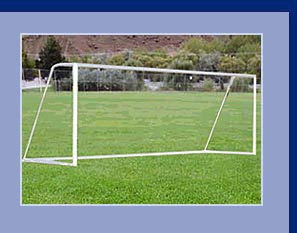
goal-post2.jpgThe Plaintiff articulated two reasons why the immunity provided by the statute should not apply to his facts. First, he contended that the statute did not apply because he was neither a participant, nor a spectator at an organized game or practice at the time of the accident. The Court rejected this theory on the basis that the immunity was not controlled by the status of the individual who was injured, but rather on the question of what was the status of the organization. If the injury arose from the conduct of the sports program, the immunity applied. Here, the placement of the goal posts on the field was irrefutably a part of the conduct of its soccer program.

The Plaintiff also contended that the real estate exception in the statute imposed liability on the association. He argued that the associations were negligent in their care and maintenance of Haskell Field by permitting improperly secured goal posts to be present on the property, and that this dangerous condition caused him serious harm. The Court rejected this argument, and an analysis that followed the common law duty of landowners to invitees with regard to unnatural and dangerous conditions on the premises.

Continue reading "No Insurance for Accidental Personal Injury Under Massachusetts Statute Protecting Non-Profit Soccer Club" »

Bookmark and Share
March 9, 2009

Personal Injury Caused to Boston Area Youth Soccer Player Not Covered by Insurance says Massachusetts Supreme Judicial Court

This is the first of a two part Blogpost,which looks at a Boston area personal injury case where the insurer avoided payment for an accident involving a youth soccer player injured by a goal post.

PART ONE- THE UNDERLYING FACTS

In this recent appellate decision, a participant in a Sudbury youth soccer program who suffered a personal injury as the result of an accident in which a metal goal post flipped over onto him during a team practice cannot sue for any alleged negligence arising from the improper placement of the posts. The Massachusetts Supreme Judicial Court affirmed a Superior Court decision that a Massachusetts Statute, G.L. c. 231, s. 85V, protected the non-profit association from such suits. 

soccer posts.jpgThe Plaintiff was a twelve year old who in April, 1998, was a participant in a program run by the Sudbury Youth Soccer Association, Inc. His team practiced and played games on a field in Sudbury, Massachusetts. The association had acquired metal goal posts and nets that were used for both practices and organized matches. Welch was injured when a goal post flipped over, striking and fracturing his right leg.
 
The Plaintiff filed an action against the Sudbury association in 2006, alleging it had negligently failed to maintain the goal posts in a safe and secure condition, and to warn him of the danger that existed if the goal posts were not properly anchored to the ground. Welch further alleged that he was seriously injured as a result of the association's careless and negligent conduct.

Continue reading "Personal Injury Caused to Boston Area Youth Soccer Player Not Covered by Insurance says Massachusetts Supreme Judicial Court " »

Bookmark and Share
March 1, 2009

Liabiliity for Personal Injuries from Accidental Death of Teenager Greater If Andover Mother Was Present During Overnight Party

SOCIAL HOST LIABILITY - PART TWO

This is part Two of a two part blogpost, in which Boston Personal Injury Lawyer, Keith L. Miller, analyzes liability issues in the recent drowning death in Andover, Massachusetts.

It now appears that a parent was present in the Andover home where an overnight teenage party ended with the drowning death of one of the female guests. The Essex County District Attorney has convened a grand jury, which is taking testimony of persons present to determine if any crimes were committed related to the death (For Additional Information see February 19, 2009 Blog, Social Host Liability -Part One ).

BEER PONG.jpgIf the evidence indeed demonstrates that these underage students were permitted to consume alcohol, or more seriously, if a parent procured or supplied the alcohol for the party, then both criminal and civil liability may attach. However, the issue of whether premises liability can attach to these facts is not as clear as it may seem, as no Massachusetts appeals court has expressly articulated a position on these particular facts.

The Massachusetts Supreme Court has long held that a social host can be found liable for injury in one particular instance. In a 1986 decision, Mc-Guiggan v. N.E. Tel. and Tel. Co., the Court created a common law theory of liability of a social host "to a person injured by an intoxicated guest's negligent operation of a motor vehicle where a social host who knew or should have known that his guest was drunk, nevertheless gave him or permitted him to take an alcoholic drink and thereafter, because of his intoxication, the guest negligently operated a motor vehicle causing the third person's injury."

The duty is imposed because it is believed that the social host knew or should have known that the guest was drunk and was in a position to protect an innocent third party from the harm. In Mc-Guiggan, the Court elected not to impose liability even though the 18 year old operator of the motor vehicle admitted he had consumed alcohol at a graduation party, and pleaded guilty to operating under the influence, after his passenger and friend died from injuries suffered when his head hit a concrete post as he put leaned out of the car window to vomit.

In Mc-Guiggan, based on testimony of the homeowners and others, the Court determined that the evidence was legally insufficient to demonstrate that the hosts knew or should have known that the driver was so impaired that he could not or should not be driving. And this was so even though the blood alcohol level of the driver was still above the legal limit 3 hours after the accident.

Continue reading "Liabiliity for Personal Injuries from Accidental Death of Teenager Greater If Andover Mother Was Present During Overnight Party" »

Bookmark and Share
February 19, 2009

Boston Personal Injury Lawyer Analyzes Drowning Death of Wellesley Teenager: Were Absent Parents liable

SOCIAL HOST LIABILITY, PART ONE

This is part One of a two part blogpost, in which Boston Personal Injury Lawyer, Keith L. Miller, analyzes liability issues in the recent drowning death in Andover, Massachusetts.

In the early morning of February 16, 2009, sixteen year old Concord Academy student, Elizabeth Mun, was found by friends face-down in a shallow stream in an upscale residential neighborhood in Andover, Massachusetts. She was pronounced dead as the result of drowning later that day at Children's Hospital in Boston.

It is believed that she had attended an overnight party at the home of a fellow Concord Academy student, whose parents apparently were not present. She had apparently left the house on her own around 5:00 a.m. and her friends became concerned when she had not returned by 6:30. The Essex District Attorney is investigating the incident, although it is presumed that alcohol may have been a factor.

Many are already drawing parallels to the death of Taylor Meyer, a King Philip Regional High School student who drowned last fall in Norfolk, Massachusetts after wandering from an underage drinking party.

If it turns out that alcohol or drugs were involved in this recent incident, the question immediately arises as to the responsibility, and by inference the premises liability, of the parents who owned the Andover home, and who appear to have left their teenage child without supervision at the home, and by implication, permitted the party to take place.

It is well known that criminal responsibility can attach when there is evidence that parents or other adults have procured alcohol for minors. In fact, last fall a 44 year old Gloucester woman was sentenced to a year in jail after pleading guilty to multiple counts of reckless endangerment and illegally supplying alcohol to minors after buying alcohol for her 13 year old daughter and her friends so that they could "party" in her home.

Continue reading "Boston Personal Injury Lawyer Analyzes Drowning Death of Wellesley Teenager: Were Absent Parents liable" »

Bookmark and Share
January 3, 2009

Holiday Bonfires Pose Severe Risk as Evidenced by New Year's Party in New Hampshire Where Three Woman Were Critically Burned

A severe fire related accident occurred as the new year struck in Freedom, NH. The location was a lakeside private home owned by one of the group, all recent graduates from Holy Cross College. The group was outside celebrating and had a bonfire going on an old grill.  It appears that the accident occurred when one of the revelors poured an accelerant, said to be a lantern fuel, onto a smoldering log, intending to restoke the fire. It is believed that gas fumes from the fuel ignited and set fire to the clothing worn by three woman who were huddled around the fire causing personal injuries to several woman present.

Two of the woman were Boston area residents and were critically injured with first, second and third degree burns. The third girl's injuries were less severe, as she was apparently wrapped with a blanket more quickly following the incident. It was said that the other girls ran back to the larger group still aflame, and only then were wrapped so that the flames could be put out.

The accident brings to mind the severe danger, which fires, and in particular outdoor bonfires present, especially during holiday times, when the consumption of alcohol seems to become a factor in the judgment used by partygoers.  The U.S. government has conducted studies, which show that outdoor fires spike during holiday periods, and that the period between midnight and 1:00 a.m. on New Years has a particularly high incidence rate of fires, and fire related accidents, much more so than other times of the winter and the rest of the year. Based on a 2001-2 study conducted by the U.S. Fire Administration, there were an estimated 6,400 fires during the New Year's period, causing an average of 30 deaths and 93 injuries.

Continue reading "Holiday Bonfires Pose Severe Risk as Evidenced by New Year's Party in New Hampshire Where Three Woman Were Critically Burned" »

Bookmark and Share
December 22, 2008

Injured Employee Entitled to Trust Fund Benefits for Income From Multiple Jobs Says Massachusetts Supreme Court

The Massachusetts Supreme Judicial Court has determined that the Workers' Compensation Trust Fund must pay benefits to an employee of a tree cutting company who failed to obtained workers' compensation insurance based on the employee's total earnings, including wages earned from a second job with an insured employer.


thmb_Limb_falling_from_free_fall_cut.jpgThe thirty-three (33) year old worker suffered a severe injury in September, 2001, when a tree limb fell onto him, severing his spinal column and leaving him a quadriplegic. and totally disabled. The tree service had violated the Workers' Compensation Act, G.L. c. 152, s. 25A, by not carrying workers' compensation insurance. The worker earned most of his income from a second job with another company, which was properly insured, but because the injury occurred while he was working for an uninsured employer, the trust fund was required to pay all of his benefits.

Following the accident, the worker filed for workman's compensation benefits, seeking two thirds of his average weekly wage from both jobs because he was totally and permanently disabled. The Trust fund objected and an administrative judge thereafter issued an order awarding benefits from the date of his injury calculated by considering only his average weekly wage from the uninsured employer.

Both parties appealed, and at a de novo hearing before the same judge, but with a stipulation that the worker was permanently and totally disabled. This time the judge ruled that the trust fund must pay permanent total incapacity benefits based on the worker's average weekly wage from both employers.

Continue reading "Injured Employee Entitled to Trust Fund Benefits for Income From Multiple Jobs Says Massachusetts Supreme Court" »

Bookmark and Share
December 6, 2008

U.S. Court of Appeals Finds that Mentally ill Female Patient was "sexually abused" by Facility Employee, limiting Coverage under Exclusion in General Liability Policy

WEST LAKE ACADEMY v. THE TRAVELERS INDEMNITY COMPANY et al.
U.S. Court of Appeals, 1st Circuit, Nos. 07-2190, 07-2204

The U.S. Court of Appeals for the First Circuit has upheld a decision of the District Court that an general commercial insurance policy issued to a mental health care provider did not provide coverage for the sexual misconduct of one of its employees, who had sexual intercourse with a minor female patients, based on a sexual molestation exclusion in the policy.

The female minor patient had been involuntarily committed to West Lake Academy, a facility for mentally ill teenagers between 1993 and June 1995. In June 1995, a West Lake employee transported the patient alone between West Lake and a bus station on several occasions. More than once, the employee had sexual intercourse with the patient, who became pregnant and had his child.

The patient successfully sued the employee father and another West Lake employee, a supervisor, who she alleged had negligently failed to supervise the father of the child and recovered a large judgment against West Lake and the employees. National Union Fire Insurance Company provided a commercial general liability insurance policy to West Lake and their employees.

After the judgment, National Union refused to pay on the claim and in July, 2000, filed suit in the District Court in Massachusetts against its insureds, seeking a declaratory judgment limiting its exposure under the policy. The National Union policy included an exclusion, entitled "Abuse or Molestation Exclusion," which limited coverage to $100,000 on claims based on abuse or molestation of anyone in the custody of the insureds.

Continue reading "U.S. Court of Appeals Finds that Mentally ill Female Patient was "sexually abused" by Facility Employee, limiting Coverage under Exclusion in General Liability Policy" »

Bookmark and Share
December 2, 2008

SJC Says Boston Accident Victims can sue Livery Service for Permitting Intoxicated Customer to Operate Vehicle After an Evening of Partying

COMMERCE INSURANCE COMPANY vs. ULTIMATE LIVERY SERVICE, INC.
SJC-10149, November 26, 2008.

The Massachusetts Supreme Judicial Court has ruled that Boston Accident Victims of a two car collision could sue a livery service whose driver permitted an intoxicated customer to exit its van after a long night of partying and drinking, and to operate his vehicle to return home. He never made it, causing an accident with another vehicle, in which one occupant was killed and several seriously injured as the result of the crash.

The Court reversed a lower court dismissal of the action against the livery service, and also reversed a declaratory judgment, which had entered, permitting the insurer, Commerce Insurance Company to avoid coverage and its obligation to defend the action.

In August, 2001, a group of men had hired the services of Ultimate Livery Service, Inc. to attend a bachelor's party. The group planned to consume alcohol and wanted someone else to drive, so they wouldn't have to worry about getting home. It was arranged that the group would be picked up and dropped off at a bar in South Boston.

Thumbnail image for stretch limo.jpgA member of the group, William Powers, drove his girl friend's vehicle to the bar on the evening of the party. He drank at the bar until Ultimate's driver and van arrived around 8 P.M. They left the bar, went to a liquor store to buy beer and then proceeded to a strip club in Rhode Island, where they continued drinking until closing around 1 A.M. They then returned to the Boston bar, continuing to drink beer in the van on the ride back.

The group arrived at the bar at about 2:00 A.M. It was closed, as was a nearby subway station. About ten minutes later, the driver departed with two member of the group, who intended to go to another party. The other passengers had left the van. The Ultimate driver did nothing to determine whether the passengers were capable of getting home on their own.

Powers, along with two others, drove off in his vehicle, and shortly thereafter, collided with another car, killing one passenger and seriously injuring most of the other occupants of both cars. Powers was transported to a nearby hospital, where a toxicology screen showed his blood alcohol level to be three times the legal limit.

Continue reading "SJC Says Boston Accident Victims can sue Livery Service for Permitting Intoxicated Customer to Operate Vehicle After an Evening of Partying" »

Bookmark and Share