Recently in CLASS ACTIONS Category

June 30, 2010

Daniel Spitzer Ponzi Scheme Busted

June 30, 2010 - David Spitzer allegedly operated several business entities as a foreign currency investment fraud, which raised over $105 million from 400 investors. This week, the Securities and Exchange Commission ("SEC") filed a complaint that claims Spitzer misled investors from at least 2004 until as recently as March 2010. Spitzer, a resident of St. Thomas, recruited investors from all over the United States.

According to the complaint, Spitzer and his sales team told investors that their money would be placed in investment funds that would, in turn, primarily be invested in foreign currency. Spitzer allegedly enticed new clients by claiming he was an extremely successful fund manager and always produced exorbitant annual returns, including one year of 180%. To facilitate his purported scheme, Spitzer allegedly issued phony documents, including false K-1s, to clients.

The SEC claims that, in reality, Spitzer only invested $30 million of client funds, including $16.5 million in a foreign entity that ultimately lost money and was liquidated back to Spitzer. Spitzer also apparently invested $16 million in money market funds but only earned a few thousand dollars.

Continue reading "Daniel Spitzer Ponzi Scheme Busted" »

Bookmark and Share
June 17, 2010

Milowe Brost, Gary Sorenson Gold Investment Fraud Stopped by Feds


June 17, 2010 - Milowe Brost, Gary Sorenson, Larry Adair, Ward Capstick, Bradley Regier, and Martin Werner allegedly operated their entities Syndicated Gold Depository, Merendon Mining Corp. Ltd., Merendon Mining (Nevada) Inc., and the Institute for Financial Learning Group of Companies, Inc. as a massive $300 million Ponzi scheme. Last week, the Securities and Exchange Commission ("SEC") filed a complaint that alleges Brost and Sorenson were the leaders of the alleged Gold mining fraud, which convinced 3,000 investors to cough up large amounts of money. merendon_logo.jpg

The SEC claims that Brost led a sales team, called Structurists, which held investment seminars where they claimed to be independent financial professionals. At the seminars, Bost and Sorenson.jpgthe men allegedly pushed investments in gold mining businesses that could generate annual returns ranging from 18 to 36 percent.
The SEC also alleges that Brost and the Structurists promised that all investments were collateralized by gold.

The complaint claims that Brost and his sales team sold shares in various entities and then through a unique "structuring" process that ultimately led to the transfer of funds from Syndicated Gold Depository to Merendon Mining Corp. Ltd. Apparently, Sorenson claims to be an independent businessman making loans to Merendon, but in reality controlled the company.

Continue reading "Milowe Brost, Gary Sorenson Gold Investment Fraud Stopped by Feds" »

Bookmark and Share
June 3, 2010

Luis Felipe Perez Diamond Investment Fraud Busted

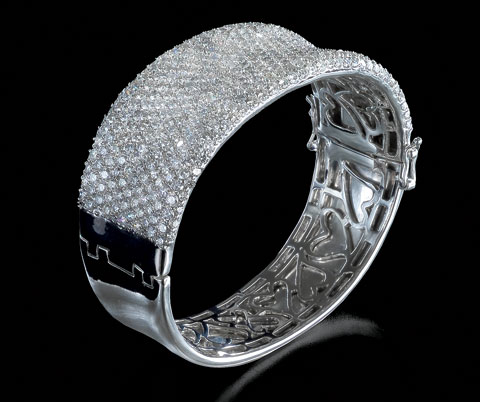
June 3, 2010 - Luis Felipe Perez allegedly operated his investment business, which he claimed financed jewelry stores and pawn shops, as a massive $40 million Ponzi scheme. The Securities and Exchange Commission ("SEC") filed aDiamond Bracelet.jpg complaint, which alleges that from 2006 to June 2009 Perez operated his scam by recruiting primarily Hispanic investors from the Miami area. Allegedly, Perez told investors that their money would be used to finance his jewelry stores, Lucky Star Diamonds Inc. and Luis Felipe Jewelry Design Corp., as well as pawn shops in New York City.

According to the SEC, Perez was able to grow his scam primarily by word of mouth, especially in the Hispanic community. The complaint says that Perez enticed investors by offering "no-risk" loan agreements with annual returns ranging from 18 to 120 percent. The SEC claims that Perez falsely told investors that their loans were secured by diamonds that had specifically been set aside for them in New York City pawn shops, which he financed. Perez apparently even duped clients by providing them access to safety deposit boxes that contained, unknown by investors, fake diamonds. The SEC further claims that Perez misled investors by telling them they were added as beneficiaries to his life insurance policy, which had lapsed at the time.

Continue reading "Luis Felipe Perez Diamond Investment Fraud Busted" »

Bookmark and Share
May 22, 2010

Edward Allen, David Olson, and A & O Investments Scam Halted

May 22, 2010 - Edward Allen and David Olson operated their real estate company, A & O Investments, LLC, as a Ponzi scheme according to the Securities and Exchange Commission ("SEC"). The SEC's complaint filed in an Ohio federal court claims that from September 2005 to December 2008 Allen and Olson raised about $14.8 million from at least 100 investors.

Apparently, A & O Investments enticed buyers by offering promissory notes with annual interest rates of 20%. Allegedly, Allen and Olson claimed that the money raised from the notes would be used to purchase and rehabilitate real estate, primarily in Florida. The complaint further alleges that A & O would profit from sales of the refurbished real estate and Allen and Olson represented to clients that they had been making successful transactions.

The SEC alleges that Allen and Olson recruited investors by sending mass mailings and word of mouth. Also, Allen and Olson apparently solicited customer of their former employer World Group Securities, Inc., a Georgia based securities broker-dealer.

Continue reading "Edward Allen, David Olson, and A & O Investments Scam Halted" »

Bookmark and Share
May 10, 2010

Millennium Bank Scam - Federal Judge Denies JPMorgan Motion to Dismiss Investor Class Action

May 10, 2010 - Victims of the Millennium Bank Ponzi scheme have survived a motion to dismiss filed by Defendant JPMorgan Chase Bank in their class action lawsuit. The complaint alleges that the bank aided and abettedThumbnail image for Thumbnail image for jpmorgan_logo.jpg the perpetrators of a $200 million Ponzi scheme which operated out of offices located in Napa, California. U.S. Magistrate Judge Edward Chen refused to dismiss four out of five of the counts, which will now proceed into a discovery phase requiring JPMorgan to produce documents and answer questions about its banking activities.

JPMorgan is the successor of failed Washington Mutual Bank ("WAMU"), which had branches in Napa, where Millennium's mastermind, William Wise and his associates, carried out their banking activities. Wise lured over 250 investors by offering certificates wamu_logo.jpgof deposit (CDs) with unrealistically high interest rates. Millennium Investors were instructed to mail checks to Napa, which were presented for deposit at the WAMU branches. Millions were commingled and then either transferred offshore or used by Wise and his cohorts for personal expenses, including payments for a private jet, an extensive wine collection, and to support Wise and his family's extravagant lifestyle.

The complaint alleges that WAMU continued to conduct business with Millennium even though it knew that investor monies were being siphoned away. Judge Chen determined that the allegations in the Complaint, if proved, would state a cause of action. Specifically, he permitted the claims of aiding and abetting fraud, aiding and abetting conversion, breach of fiduciary duty, and violation of California Business Code to proceed. However, he found no evidence to support the claim that there was a conspiracy to commit fraud.

The judge's decision appears below:

Continue reading "Millennium Bank Scam - Federal Judge Denies JPMorgan Motion to Dismiss Investor Class Action" »

Bookmark and Share
April 22, 2010

SEC Halts Nevin Shapiro and Capitol Investments Alleged Ponzi Scheme

April 22, 2010 - Nevin Shapiro allegedly operated Capitol Investments USA, Inc. ("Capitol"), a Miami based grocery diverter, as an investment fraud. According to the complaint filed by the
groceries.jpg
  Securities and Exchange Commission ("SEC"), Shapiro's fraud raised $900 million from at least 60 investors across the country.

According to the SEC, from February 2003 to November 2009, Shapiro sold Capitol promissory notes with interest rates ranging from 10 to 26 percent. Apparently, Capitol couldn't keep up with the payments to investors and in January 2005, Shapiro began operating Capitol as a Ponzi Scheme. The complaint claims that Shapiro used his business contacts and word of mouth to attract investors and told them that their money would be used to finance the purchasing and reselling of groceries.

Continue reading "SEC Halts Nevin Shapiro and Capitol Investments Alleged Ponzi Scheme" »

Bookmark and Share
November 14, 2009

Oxy® Face Wash Caused Skin Discoloration Says Afro-American College Student

oxy-wash-max-large.jpg

November 14, 2009 - An eighteen year old Boston area college student reports that she purchased and used Oxy® Maximum Face Wash, a well known acne treatment product sold in pharmacies throughout the U.S., but eventually the skin on her face became significantly discolored in areas where she had applied the product.

 The young woman first bought the over-the-counter medication in the summer of 2009 at a CVS store. She used it daily as directed for several months, but eventually noticed that she was losing skin color in the areas of her face where she had applied the face wash. She immediately ceased use of the product, but the skin discoloration remained.

Now, several months later, and even though she has not used the product again, she still has significant discolored patches on her face. Recently, she was examined by a dermatologist who was not willing to confirm whether or not the condition was permanent. In his words, "only time will tell". Meanwhile, this young lady must now apply make-up to her face whenever she goes out, in an attempt to hide what she considers obvious disfigurement as the result of her use of the Oxy®  product.


                      CroppedOxyPictureAfter4.jpg                                  Oxy®  Face Wash, manufactured by the Mantholatum Company, Inc., is prominently advertised to contain ten percent (10%) benzoyl peroxide, a product widely used to fight acne, but which has also been reported to have side effects, causing itchy, dry skin and rashes. The product's label and other literature give no warning that skin discoloration could occur as a result of use of the Oxy®  Acne Products.

Continue reading "Oxy® Face Wash Caused Skin Discoloration Says Afro-American College Student" »

Bookmark and Share
November 14, 2009

Millennium Bank Scam - Class Action Claims JPMorgan Chase ( WAMU ) Aided Ponzi Scheme

Thumbnail image for Thumbnail image for millennium_bank_1.jpgNovember 14, 2009 - The Boston Law Offices of Keith L. Miller and Washington D.C. based, Steven Berk (Berk Law), in conjunction with Cotchett, Pitre & McCarthy, has filed a class action against JPMorganChase as the successor in interest to Washington Mutual ("WAMU") in the US District Court for the Northern District of California. The complaint alleges that WAMU's banking services played an integral role in facilitating the $150 Million Ponzi scheme perpetrated by William Wise and Millennium Bank.


Thumbnail image for tv photo.jpgAccording to the complaint, Wise and Millennium Bank raised over $150 million from over 250 investors by promising returns as high as 9% on premium certificates of deposit, when the market was offering much lower rates. Millennium Bank was primarily operated out of Napa, California and claimed to be a subsidiary of United Trust of Switzerland, another Wise entity.  Millennium Bank's sophisticated internet marketing allowed them to dupe hundreds of investors worldwide.


As described in the Complaint, Millennium Bank's staff in Napa instructed purchasers of the high-yield CDs to wire funds to its WAMU accounts opened in Las Vegas, Nevada under fictitious names, or to send checks to Napa, which were subsequently deposited into these accounts. The money then moved offshore or was used to pay for Wise's lavish lifestyle. There is no evidence that he made any investments with victims' money. A copy of the Complaint appears below:


Continue reading "Millennium Bank Scam - Class Action Claims JPMorgan Chase ( WAMU ) Aided Ponzi Scheme" »

Bookmark and Share
November 2, 2009

UNC Says No Consent Required for Mammography Registry in Spite of Massive Data Breach

November 2, 2009 - The University of North Carolina is now apparently claiming that no consent was required to include patients, and their personal information, in the data base of a statewide mammography registry. According to Karen McCall, UNC Health Care spokesperson, "federal regulators waive consent requirements for projects like the Carolina Mammography Registry because it is a population-based study dealing with hundreds of thousands of pieces of data".

UNC Dome.jpgThis is interesting news for the thousands of female patients whose birth dates and social security numbers were included in the database, and may have been compromised by hackers who gained access to the system as far back as 2007. It appears that most of the patients had no knowledge either that they were being included in any study, or that personal information would be a part of the information provided.


In fact many learned of their inclusion in the study only when they received a letter from the Carolina Mammography Registry and signed by Bonnie C. Yankaskas, Ph.D., Professor, Department of Radiology, which stated as follows:

I am writing to notify you about a computer security breach that may have
resulted in the unauthorized exposure of your personal information. In late
July 2009, information technology employees at The University of North
Carolina at Chapel Hill ("University") discovered that a computer server
storing data for the Carolina Mammography Registry ("Registry") at the
University's School of Medicine was targeted in a computer hack. We believe
this hacking incident may have occurred in 2007. When University staff
learned that the server was compromised, the server was taken down, and all
data on the server were removed.

The letter then went on to say:

Unfortunately, some of your personal information was on the Registry's server
at the time of the hacking incident. This information included your name and
Social Security number. In many cases, these data also included your date of
birth, address, phone number, demographic information, insurance status, and
health history information.

UNC apparently is relying on the fact that the Mammography Registry was part of a federally funded cancer study and that federal regulations waived the need for consent. However, McCall failed to cite any particular federal regulation, which would circumvent an individual's right to privacy, and in particular, which would expressly permit the dissemination of a patient's most private personal information. When asked why patients would not have been asked to consent to the use of this information in the study, McCall stated that there were "so many participants that the cost of getting permission would be prohibitive to the point of not being able to do the study" .

Source: News Observer

Continue reading "UNC Says No Consent Required for Mammography Registry in Spite of Massive Data Breach" »

Bookmark and Share
October 27, 2009

UNC Medical School Reveals Data Breach of Mammography Registry

October 27, 2009 - The University of North Carolina School of Medicine has recently disclosed that, in the year 2007, internet hackers gained access to a database called the Carolina Mammography Registry. Apparently, some of the records contained personal information about patients, including dates of birth and social security numbers. Information for thousands of female UNC Dome.jpgpatients who had received mammographies in several North Carolina private practices were added to the database, apparently without the knowledge or permission of those patients.

The data was collected by the UNC School of Medicine to conduct research as part of a national study. The database contained information pertaining to approximately 236,000 women. UNC reported that the breach included the records of more 163,000 of those women. The information was retained on a server to be accessible to researchers who were a part of the study. The goals of the study were to improve breast cancer detection, understand risk factors, guide future research, and inform policy makers. The database was part of a national study funded by the National Institute of Health's National Cancer Institute.


                                                       It appears that tCMR banner.jpghe IT department at UNC discovered the breach in July, 2009, when researchers could not access the database. Viruses were discovered, which dated back to 2007. UNC's IT department immediately took down the server and removed all of the information that had been previously posted. The UNC School of Medicine then began contacting women who they believed may have been affected by the breach. Two different letters apparently went out to women whose information had been exposed; one letter to women whose Social Security Number was in the database, and one letter to women whose number was not.

Both UNC and outside law enforcement officials are investigating the breach, but thus far have not been able to determine if any information was removed, or who was responsible for the breach. Apparently, the investigation remains open at this point.

 Information Sources: UNC School of Medicine, esecurityplanet.com

Continue reading "UNC Medical School Reveals Data Breach of Mammography Registry" »

Bookmark and Share