Recently in WORK RELATED INJURY Category

June 17, 2009

Brockton, Massachusetts Police Officer Cannot Recover from Hospital for Personal Injuries

Boston Massachusetts Personal Injury Attorney, Keith L. Miller, reviews a recent Supreme Judicial Court case involving an injured police officer:

A Massachusetts police officer who suffered serious personal injuries, while responding to a motor vehicle/pedestrian accident, cannot recover from the hospital, which treated and released the pedestrian just prior to the accident, says the Massachusetts Supreme Judicial Court.

Thumbnail image for eps_mg-182.jpgIn November, 2004, the Brockton, Massachusetts police officer, was responding to a car accident involving a pedestrian, While driving to the accident scene, the officer's police cruiser was struck by another vehicle resulting in serious and permanent injuries to the officer. He was responding to an accident in which an individual just released from Brockton Hospital had been struck and killed by a motor vehicle.

The patient had undergone a colonoscopy at the hospital earlier in the day and had been given Demerol and Versed, both narcotic sedatives. The hospital had a written policy, which prevented patients who had been given narcotics from being discharged without an escort. This patient left the hospital with no escort.

The Plaintiff police officer had alleged that the hospital was negligent and had a duty of care to protect third parties from harm caused by its "impaired" patients. The officer claimed that the hospital had a special medical relationship with its patient prior to him leaving the premises, which created a duty to control the patient's conduct in order to protect against harm the patient might cause to others, even after the patient had been discharged.

Continue reading "Brockton, Massachusetts Police Officer Cannot Recover from Hospital for Personal Injuries " »

Bookmark and Share
May 15, 2009

Conflict of Interest Evident when Disability Insurer Both Reviews and Pays Claim for Benefits Says First Circuit Court of Appeals

Massachusettts Personal Injury Attorney, Keith L. Miller, reviews and analyzes a recent U.S. First Circuit Court of Appeals decision. This is the second part of a two part blogpost, involving the denial of an employee long term disability claim, where the insurer both reviewed and paid claims, allegedly giving rise to a conflict of interest. The First Part reviewed facts leading up the to the employee's application for long term disability insurance, which the insurer rejected, and resulted in an action in Federal District Court.

_______________________________________________________________________________________

In June of 2002, the plaintiff employee in this case filed for long-term benefits. She would qualify as disabled under the long-term plan if, for two consecutive years, she was unable to perform the material and substantial duties of her occupation, and subsequently was unable to perform "the material and substantial duties of any occupation". The same Liberty nurse who had denied her earlier claim, also reviewed this file, which contained medical support for a finding that the plaintiff's symptoms had become worse. She had also completed an activities questionnaire in which she claimed to have severe restrictions on her ability to sit, stand, walk, drive, and concentrate.

liberty mutual 2.jpgIn her second review, the Liberty Mutual nurse discounted the IME report, suggested that the plaintiff's condition was not as grave as the completed questionnaire implied, concluded that the plaintiff did not qualify for benefits and Liberty denied the claim. The plaintiff requested further review. Liberty responded by hiring a private investigator to observe the plaintiff's activities. The investigator produced reports and photographs showing that the plaintiff was active.

With this information, Liberty then utilized a referral service furnishing physicians to evaluate the functional abilities of claimants. One of its physicians concluded that the plaintiff was capable of working full-time in her primarily sedentary position. On December 10, 2002, Liberty reaffirmed its earlier denial of benefits.

Fourteen months later, an administrative law judge ruled the plaintiff was entitled to social security disability benefits retroactive to her last day of actual work. The judge premised this decision on a subsidiary finding that the plaintiff was disabled within the meaning of the Social Security Act. Although the definition of disability under the Act differed from the definition of disability under the Liberty's plan, the plaintiff forwarded the SSDI ruling to Liberty, along with a further report from her rheumatologist, seeking reconsideration of the denial.

Liberty refused to reverse its decision, which resulted in the district court action. The U.S. District Court granted summary judgement to Liberty, deciding that Liberty had not abused its discretion in denying the claim. On initial appeal, the Appeals Court affirmed, but then the United States Supreme Court made a ruling, which changed the substantive law in the area and resulted in a successful request for rehearing of this case.

IThumbnail image for supreme court.jpgn rehearing the case, the Court analyzed the Supreme Court's decision in  Metropolitan Life Insurance Co. v. Glenn, 128 S. Ct. 2343 (2008). There, the Supreme Court had reviewed a denial of benefits by an administrator that passed judgment upon and paid claims under an ERISA-regulated plan.  It concluded that courts should recognize that a conflict exists whenever a plan administrator, whether an employer or an insurer, is in the position of both adjudicating claims and paying awarded benefits.

Continue reading "Conflict of Interest Evident when Disability Insurer Both Reviews and Pays Claim for Benefits Says First Circuit Court of Appeals" »

Bookmark and Share
May 11, 2009

Boston Personal Injury Attorney Reviews Federal Decision Acknowledging Conflict of Interest when Disability Insurer Reviews Request and Also Pays Employee Benefits

This is the first of a two part Blogpost, where Massachusettts Personal Injury Attorney, Keith L. Miller, reviews and analyzes a recent First Circuit U.S. Court of Appeals decision. The case involves an employee disability claim and issues pertaining to a perceived conflict of interest.

liberty mutual.jpgIn this case, the U.S. First Circuit Court of Appeals remanded a case to the District Court, where an employee challenged the denial of her request for long-term disability benefits. The Plaintiff alleged that the employer's insurer, who denied her benefits, both reviewed and decided on her eligibility and was responsible for the payments, which was a conflict of interest. She also alleged that a physician referral service the insurer utilized was biased, given it generated large revenues from its reviews, and usually recommended in favor of the employer.

The Court justified the remand, based on a recent decision of the United States Supreme Court in Metropolitan Life Insurance Co. v. Glenn, 128 S. Ct. 2343 (2008). The Supreme Court had previously reviewed a denial of benefits by an administrator that passed judgment upon and paid claims under an ERISA-regulated plan.  It concluded that courts should recognize that a conflict exists whenever a plan administrator, whether an employer or an insurer, is in the position of both adjudicating claims and paying awarded benefits.

fibromylagia.jpgIn this case, in 1996 a primary care physician had diagnosed the plaintiff employee as suffering from fibromyalgia, which is a disorder involving muscle and connective tissue pain. Patients note heightened and painful response to gentle touch, as well as debilitating fatigue, sleep disturbance, and joint stiffness. The plaintiff was a group leader employed by GenRad, Inc. In spite of the diagnosis, she continued to work. At the time she was covered under a short-term and a long-term disability insurance plan supplied by Defendant, Liberty Life Assurance Company (Liberty), who also administered both plans.
Continue reading "Boston Personal Injury Attorney Reviews Federal Decision Acknowledging Conflict of Interest when Disability Insurer Reviews Request and Also Pays Employee Benefits" »

Bookmark and Share
April 21, 2009

Employee's Personal Injuries After Fall through Open Trap Door in Floral Shop does not Warrant Double Compensation, Says Appeals Court

Boston Personal Injury Lawyer, Keith L. Miller, analyzes a recent Appeals Court decision pertaining to double penalties under the Worken's Compensation Act.

The case involves a store employee who suffered serious personal injuries after falling through a trap door in the floor of a floral shop, the Massachusetts Appeals Court has reversed a decision by the Department of Industrial Accidents reviewing board that awarded an employee double compensation (under Mass. G.L. c. 152, ยง 28), finding that the employee's injury was due to the serious and wilful misconduct of the employer. The Appeals Court determined that the record did not support a finding that the employer's conduct rose to the level of a wanton and reckless disregard for safety.

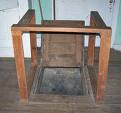
trap door.jpgThe employee was working at a floral shop on Valentines day in 1991 when she fell into a trap-door floor opening, which covered a set of stairs leading down to the cellar. She fell into the hole sustaining serious personal injuries. The floor door measured approximately eight feet by three feet, and qualified as a "floor opening", which made it subject to the state and federal regulations, and certain mandatory safeguards.

The employer was not aware of the regulations, and instead relied on its own warning system of orange safety cones and chains to warn and protect the employees. However, the system was only used sporadically, and was not in place on the day of the accident. There was also some evidence that there may have been insufficient floor space in the area of the trap door due to the placement of a table for completed work orders. There was also evidence that because it was Valentine's day, the work pace in the store was much heavier than normal.

Continue reading "Employee's Personal Injuries After Fall through Open Trap Door in Floral Shop does not Warrant Double Compensation, Says Appeals Court " »

Bookmark and Share
April 6, 2009

Personal Injuries Suffered by Contract Worker May be Recoverable from Manufacturing Company where he Worked

This is Part Two of a two part Blogpost where Boston Personal Injury Lawyer, Keith L. Miller, reviews and analyzes a recent First Circuit U.S. Court of Appeals ruling, in which an insurer sought a declaration that there was no coverage for an personal injuries as the result of an accident involving a contract worker who severed his arm in a wool picking machine. The worker had sued the Massachusetts recycling company where he had been working for a number of months. (Click here to view Part One)

PART TWO :  THE COURT ANALYZES DISTINCTION BETWEEN "LEASED WORKER" AND "TEMPORARY WORKER" IN POLICY TO DETERMINE COVERAGE

Having reviewed the underlying facts of the case, the Court went on to analyze the express language of the insurance policy, attempting to discern whether the lower court had correctly determined that the the worker's contract was indefinite and therefore not temporary, which was its basis for ruling that there was no coverage for the accident.

wool baling machine.jpgIn the policy a leased worker was defined as a person leased to you by a labor leasing firm under an agreement between you and the labor leasing firm, to perform duties related to the conduct of your business. A temporary worker was defined as a person who is furnished to you to substitute for a permanent "employee" on leave or to meet seasonal or short-term workload conditions.

The question then for the Court of Appeals was whether Torres was a "leased worker," and thus excluded from coverage; or a "temporary worker," thus obligating Scottsdale to provide a defense and coverage in Torres's lawsuit. The district court had determined that Torres was not a temporary worker on the basis that the term "short term" worker, though not defined in the policy, suggested a brief and relatively finite period of time.

Based on deposition testimony of CTC's president that Torres was to stay at CTC "for as long as he was needed", and a Venturi manager's testimony that Torres was assigned to CTC "indefinitely," the lower court determined  that "indefinite" and "short-term" were mutually exclusive, that Torres' stay with CTC was indefinite and that he was therefore not a "temporary worker". Therefore his claim was not covered under the policy.

Continue reading "Personal Injuries Suffered by Contract Worker May be Recoverable from Manufacturing Company where he Worked" »

Bookmark and Share
April 3, 2009

Boston Personal Injury Attorney Reviews U.S. Court of Appeals Analysis of Insurance Coverage for "Leased" Worker's Severed Arm

In this two part Blogpost, Boston Accident Lawyer, Keith L. Miller, reviews and analyzes a First Circuit U.S. Court of Appeals decision, which considers insurance coverage issues for an accident involving a man whose arm was severed in a wool picking machine, while engaged as a contract worker for a Western Massachusetts recycling company.

PART ONE :  PERSONAL INJURIES FROM CONTRACT WORKER'S SEVERED ARM MAY NOT BE COVERED BY INSURANCE

On August 23, 2004, Raul Torres suffered serious personal injuries when his arm was severed in a wool picking machine while working at Carrabassett Trading Company  "CTC") in North Oxford, Massachusetts. CTC is a recycling company, which collects and recycles waste fiber from textile mills, bales up the material and sells them to other manufacturers. 

wool picking machine.jpgTorres was not an employee of CTC. Rather, his services were provided to CTC by his employer, Venturi Staffing Company, Inc ("Venturi"). Because CTC has an inconsistent demand for its products, it hires such contract workers to supplement its permanent staff of five. Torres filed suit against CTC in Massahusetts state court.

CTC's insurer filed a federal court action seeking a declaration that there was no coverage for the injuries due to "employer" exceptions in the company's liability policy. The Court reversed a district court ruling in favor of the insurer, and remanded the case for further proceedings.

Continue reading "Boston Personal Injury Attorney Reviews U.S. Court of Appeals Analysis of Insurance Coverage for "Leased" Worker's Severed Arm" »

Bookmark and Share
April 2, 2009

No Recovery for Personal Injuries where Court Sees Defamation but No Malice

(This Boston Accident and Injury Lawyer Blogpost is the Last in a Three Part Analysis of a Recent U.S. Appeals Court Ruling involving defamation, public officials and the news media Click here to view Part One and Click Here to view Part Two)

PART THREE : THE COURT RULES ON THE DEFAMATORY BROADCAST

As stated previously, under Maine common law, a plaintiff alleging defamation must show a false and defamatory statement published without privilege to a third party resulting in harm to the plaintiff.

HAMSTEAK.jpgIn the lower court proceeding, the defendants had contended that the various statements made on the show and attributed to Levesque either were not defamatory or, because Levesque had stipulated that he was a public official, it could not be shown that they were made with actual malice. The district court held that the statements were protected on multiple grounds. It found the "hate crime" comments substantially true and mention of the "anti-ham response plan" protected as "rhetorical hyperbole".

However, the lower court determined that the ham sandwich and the "ham is not a toy" comments were materially false, reasonably susceptible of a defamatory meaning, and highly offensive. Yet the court believed that Levesque had failed to demonstrate that the defendants had acted with constitutional malice when they made the defamatory comments.

The Court of Appeals agreed, finding that most, but not all of the statements attributed to the Plaintiff were largely true, although laced with "imaginative expression" or "rhetorical hyperbole", which it concluded were protected speech.

Continue reading "No Recovery for Personal Injuries where Court Sees Defamation but No Malice" »

Bookmark and Share
March 30, 2009

"Negligent" vs. "Malicious" Reporting: When is the Line Crossed? Boston Injury Lawyer Discusses Issue

(This BlogPost written by Boston Personal Injury Attorney, Keith L. Miller, is the Second in a Three Part Analysis of a Recent U.S. Appeals Court Ruling involving defamation, public officials and the news media Click here to view Part One)

PART TWO - FOX & FRIENDS READS AND REACTS

On April 24, a line producer for "Fox & Friends" discovered the Plagman article. The Fox News Research Department read the Plagman article and conducted further research, and discovered additional information, including the original Lewiston Sun Journal story. The Plagman articles and other research materials were delivered to the show's Doocy and Kilmeade. Doocy used Google News to conduct additional research, also found the Plagman article and Sun Journal stories, and decided to use the story as part of its show.

ham sandwich.jpgDuring the three-hour show, Doocy and Kilmeade repeatedly raised the April 11 incident, ridiculed Levesque, and blamed him for the handling of the incident. They reported as true several of the fabricated quotations that Plagman attributed to Levesque including the fact that the student had placed a ham sandwich on the table, the "ham is not a toy" statement and also attributed to Levesque a false statement comparing the incident to Mogadishu. Throughout the show, Doocy and Kilmeade repeated these falsified quotations.

After the April 11 incident, Levesque had received derogatory and threatening emails and phone calls from persons who learned about the incident and the student's suspension. Of seventy-five emails submitted to the district court, sixty-nine were written after the "Fox & Friends" cablecast. As the result of these incidents, he elected to bring an action for defamation.

Continue reading ""Negligent" vs. "Malicious" Reporting: When is the Line Crossed? Boston Injury Lawyer Discusses Issue" »

Bookmark and Share
March 25, 2009

Boston Accident Attorney Discusses Case involving Alleged Defamation by "Fox & Friends" Hosts

(This Blogpost is the First in a Three Part Series by Boston Injury Lawyer, Keith L. Miller, who analyzes an interesting recent U.S. First Circuit Court of Appeals Ruling involving defamation, public officials and the news media. Click Here to view Part Two)

PART ONE - THE SCHOOL HATE CRIME INCIDENT MAKES LOCAL NEWS  

The U.S. District Court of Massachusetts has affirmed a lower Court's summary judgment ruling that Fox News Network, LLC ("Fox"), and "Fox and Friends" television personalities, Steve Doocy and Brian Kilmeade, did not defame the Superintendent of the Lewiston, Maine public schools during a morning show, which ran in April, 2007.

FOX AND FRIENDS.jpgThe story involves an incident, which took place on April 11, 2007, when a student at the Lewiston Middle School placed a bag containing leftover ham on the cafeteria table where Somali Muslim students were sitting for lunch. The Somali students reported the incident, which resulted in an investigation and suspension of the offending students. The incident was classified as a "Hate Crime/Bias" in the school's computer system, and a police report was filed characterizing the incident as "Crime: Harassment/Hate Bias."

The Plaintiff, Leon Levesque, was the superintendent of the Lewiston School System. He was informed of the suspension and endorsed the decision. The following week, a reporter for the Lewiston Sun Journal, interviewed Levesque for an article she intended to write about the incident, which was published on April 19, 2007. The article included quotations from Levesque, describing the offending student's conduct as "a hate incident".
 

Continue reading "Boston Accident Attorney Discusses Case involving Alleged Defamation by "Fox & Friends" Hosts" »

Bookmark and Share
March 19, 2009

Personal Injury Insurer for Construction Accident Victim Cannot Recover Attorney's Fees for Winning Declaratory Judgment Action

This Blogpost by Boston Personal Injury and Accident Laywer, Keith L. Miller, anaylzes a battle between insurers over costs of construction accident.

Following a construction site accident where an insurer of a subcontractor refused to defend the general contractor, who then successfully filed a declaratory action to force the subcontractor's insurer to share in the defense and settlement costs of the action, the Massachusetts Supreme Judicial Court has refused to permit the general's insurer to recover the attorney's fees incurred in successfully bringing its declaratory judgment action.
 
zurich.jpgIn January of 2001 a worker fell and suffered injuries while employed on a project in Uxbridge, Massachusetts. A year later he brought a negligence action against the general contractor and another subcontractor on the project. The general contractor was insured under a general liability insurance policy with Zurich American Insurance Company (Zurich). The subcontractor also had a policy issued by Worcester Insurance Company (Worcester), and was required by contract to list the general as an additional insured.

Upon filing of the complaint, the general called upon the subcontractor and Worcester to defend. They refused and Zurich defended. Zurich also brought a declaratory judgment action in the general's name, seeking indemnification from the subcontractor and Worcester for their refusal to defend. Ultimately, the negligence case settled, with the general contributing $75,000 to the settlement.

The general contractor prevailed in the declaratory judgment action and Worcester was ordered to pay one half of both the settlement amount and the costs of defending the negligence action. However, the general contractor also sought an award of the attorney's fees incurred to file and prevail in the declaratory judgment action, even though it was evident that it was Zurich who had paid the fees. The Superior Court judge denied the request and the general contractor appealed.

The SJC affirmed and discussed at length its reasoning. Massachusetts generally follows the customary approach to the award of attorney's fees in civil litigation, known as the "American Rule". In the absence of some statute or other rule, successful litigants must nonetheless pay their own attorney's fees and expenses.

Continue reading "Personal Injury Insurer for Construction Accident Victim Cannot Recover Attorney's Fees for Winning Declaratory Judgment Action" »

Bookmark and Share
February 12, 2009

Employee's Right to Benefits for Work Related Injury not Defeated by Pre-existing Condition if Employer Fails to Show that Earlier Injury was Predominant Cause of Disability says Massachusetts Appeals Court

A worker was entitled to medical and disability payments under the Massachusetts worker's compensation statute for a work related injury even though there was evidence in his own medical record that he had a pre-existing back condition.

The Massachusetts Appeals Court determined that the insurer for the employer had failed to produce evidence to overcome the opinion of the worker's chiropractor that the injuries were primarily related to the new injury, rather than the pre-existing degenerative back condition, as was required under G.L. c. 152, s. 1(7A).

On December 31, 2004, Scott MacDonald was cleaning up a worksite at the end of a work day. While lifting buckets of waterproofing, he felt a tightness in his back, which did not seem sufficiently serious at the time to prevent him from completing his workday. However, the following day the pain became excruciating, and he sought treatment with a chiropractor, which continued for the next four months.

The chiropractor also recommended that he obtain an MRI, which revealed disc herniations and degenerative changes. MacDonald then sought treatment from a group of neurologists, whose reports referenced prior back injuries and treatment, and made a diagnosis of pre-existing degenerative disc disease. The records show that MacDonald's condition was improved in March, 2005 and he was back to work by the beginning of May, 2005.

McDonald sought benefits for a work related injury, which his employer's insurer challenged on the basis that his injury was pre-existing and not work related. An administrative judge heard MacDonald's claim and awarded medical benefits, temporary total incapacity from January 1, 2005, to March 15, 2005, and temporary partial incapacity from March 16, 2005, until April 30, 2005.

Continue reading "Employee's Right to Benefits for Work Related Injury not Defeated by Pre-existing Condition if Employer Fails to Show that Earlier Injury was Predominant Cause of Disability says Massachusetts Appeals Court" »

Bookmark and Share
February 8, 2009

Downtown Boston Construction Accident Leaves One dead and One seriously Injured when Hydraulic Lift Topples to Ground

A serious and deadly construction accident, which took place in downtown Boston on Saturday, February 7, 2009, reminds of the dangers associated with construction related work, and in particular work being performed at high elevations using lift equipment.

In the Saturday incident, a mobile lift toppled and fell into a vacant lot used by the Brattle Book Shop, where there were several patrons present. The falll killed a construction worker who was working on the lift and severly injured a second worker. It is reported that the crane was being used to inspects roofs on a Suffolk University Dormitory, which recently opened on West Street, several blocks from downtown crossing.

According to fire officials the two men involved in the accident were working for Reliable Roofing & Sheet Metal LLC of Framingham, Massachusetts. It appears that Suffolk had hired Tremco Inc. of Beachwood, Ohio, to inspect the roof of the building located at 10 West Street. Tremco then subcontracted with Reliable Roofing to do the work. The lift being used had been rented from Equipment 4 Rent, located in South Boston and West Bridgewater, Massachusetts.

This was the second fatal accident involving lift and staging equipment in downtown Boston in the last year. The prior accident took place at a building a few blocks away on Boylston Street being renovated by Emerson College, which killed another construction worker as well as the operator of a motor vehicle, which was passing on the street below.

In such accidents, a worker is barred from suing his employer by the Worker's Compensation Act in Massachusetts. However, claims can be made against other "third parties" involved in the work, but only if it can be proved that their acts and/or omissions were a contributing the cause of the accident.

Questions inevitably arise after such an accident: did the equipment fail? Were the workers properly instructed in the use and operation of the equipment? Were there adequate safety measures in place to protect the workers? Was someone other than the employer of the injured workers who had these responsibilities? Did anyone interfere with the use and operation of the equipment?

Continue reading "Downtown Boston Construction Accident Leaves One dead and One seriously Injured when Hydraulic Lift Topples to Ground" »

Bookmark and Share
January 30, 2009

Jury Award to Victim of Forklift Accident for $1.5 Million Upheld by U.S. First Circuit Court of Appeals

_thumbForklift.jpgThe wife of an employee who suffered injuries while operating a forklift, which resulted in his death, is entitled to keep an award of $1.5 million awarded by a jury who found that the manufacturer of the forklift beached a duty it owed to the subsequent users of the machine, even though they were not its original purchasers.

The U.S. First Circuit Court of Appeals had certified a question to the Maine Supreme Court regarding a jury instruction given in the case, which was taken from the Restatement of Torts, section 10, involving products liability. The question was whether a manufacturer had a duty to warn known but indirect purchasers where a product was not defective at the time of sale, but a product hazard developed thereafter.

The Maine Supreme Court answered in the affirmative, not relying on the Restatement language, but based on the facts presented in the case, determining that liability could be established on a theory of simple negligence. This was so because the manufacturer specifically knew that this company owned one of its forklifts and therefore the risk of injury to this particular defendant was foreseeable.

The Defendant argued that it was entitled to a new trial because the Restatement jury instruction was improper, based on this interpretation. The First Circuit disagreed. Specifically, the Court found that the duty of care issue had been properly presented to the jury, and before the Court made any kind of ruling on the jury instructions, and in fact it was the Defendant who had requested the Restatement instruction.

Continue reading "Jury Award to Victim of Forklift Accident for $1.5 Million Upheld by U.S. First Circuit Court of Appeals" »

Bookmark and Share
January 10, 2009

Personal Injury Claim Possible after Police Officer Allegedly Used Excessive Force in Detention of Woman in Prostitution Sting Says U.S. Appeals Court

prostitution02cc_400.jpgA police officer who prevented an suspected prostitute from leaving a hotel by grabbing her in a hotel hallway and then detaining in her in a hotel room, after physically preventing her from leaving the premises, may be liable for peronsal injuries as the result of using excessive force, but not for wrongful detention, according to the U.S. Court of Appeals.

The case involved a prostitution sting, which took place in a hotel in Portland, Maine in March, 2006. The hotel room was set up for video and audio surveillance, with officers and a prosecutor set up in an adjoinging hotel room. The Plaintiff had responded to a telephone request for an exotic dancer to come to the hotel. An undercover officer was in the room impersonating a customer seeking sexual favors.

The Plaintiff entered the room, and was asked to undress, but suspicious of the circumstances, told the officer she was only there to dance and then asked the officer to take his clothes off. He refused. She then agreed to undress, but quickly discerned that the police were involved. Money was sitting on the dresser and the woman took a $20.00 to "pay for her trouble", and commenced to leave the room and the hotel.

However, she was apprehended in the hallway by a police officer who had been in the adjoining room. He grabbed the Plaintiff by the arm, put her against the wall, and then took her back into the hotel room to further question her. She was ultimately permitted to leave without any arrest. The Plaintiff went home, called the police, and later went to the hospital, where was treated for injuries to her arm and shoulder, which later was diagnosed as a torn rotator cuff.

The Plaintiff filed a 42 U.S.C. 1983 action, claiming her civil rights had been violated by the police officer, alleging wrongful detention and excessive force. The Defendant moved for summary judgment, which was granted by the U.S. District Court Judge, finding that the police officer had probable cause to detain the Plaintiff based on the "pooled knowledge" of the police present, and specifically because the Plaintiff had stolen the $20.00 bill (although she gave it back at the hotel). The judge ruled that the detention, and force used, were reasonable, given that there was probable cause for an arrest and that the officer had limited immunity in carrying out reasonable and appropriate police activities.

Continue reading "Personal Injury Claim Possible after Police Officer Allegedly Used Excessive Force in Detention of Woman in Prostitution Sting Says U.S. Appeals Court" »

Bookmark and Share
December 22, 2008

Injured Employee Entitled to Trust Fund Benefits for Income From Multiple Jobs Says Massachusetts Supreme Court

The Massachusetts Supreme Judicial Court has determined that the Workers' Compensation Trust Fund must pay benefits to an employee of a tree cutting company who failed to obtained workers' compensation insurance based on the employee's total earnings, including wages earned from a second job with an insured employer.


thmb_Limb_falling_from_free_fall_cut.jpgThe thirty-three (33) year old worker suffered a severe injury in September, 2001, when a tree limb fell onto him, severing his spinal column and leaving him a quadriplegic. and totally disabled. The tree service had violated the Workers' Compensation Act, G.L. c. 152, s. 25A, by not carrying workers' compensation insurance. The worker earned most of his income from a second job with another company, which was properly insured, but because the injury occurred while he was working for an uninsured employer, the trust fund was required to pay all of his benefits.

Following the accident, the worker filed for workman's compensation benefits, seeking two thirds of his average weekly wage from both jobs because he was totally and permanently disabled. The Trust fund objected and an administrative judge thereafter issued an order awarding benefits from the date of his injury calculated by considering only his average weekly wage from the uninsured employer.

Both parties appealed, and at a de novo hearing before the same judge, but with a stipulation that the worker was permanently and totally disabled. This time the judge ruled that the trust fund must pay permanent total incapacity benefits based on the worker's average weekly wage from both employers.

Continue reading "Injured Employee Entitled to Trust Fund Benefits for Income From Multiple Jobs Says Massachusetts Supreme Court" »

Bookmark and Share